
 EN
EN ES
ES ZH
ZH AR
AR FR
FR HE
HEStanding-water extraction
Removal of accessible water after the source, electrical condition, and contamination category are assessed.
Blue Steel LLC
For appropriate water events in basements or finished living areas, we can extract accessible standing water, remove approved wet carpet, padding, and affected finish materials, clean the area, and place professional drying equipment. The source, water category, electrical safety, and extent of damage must be evaluated before work begins.
Request an Estimate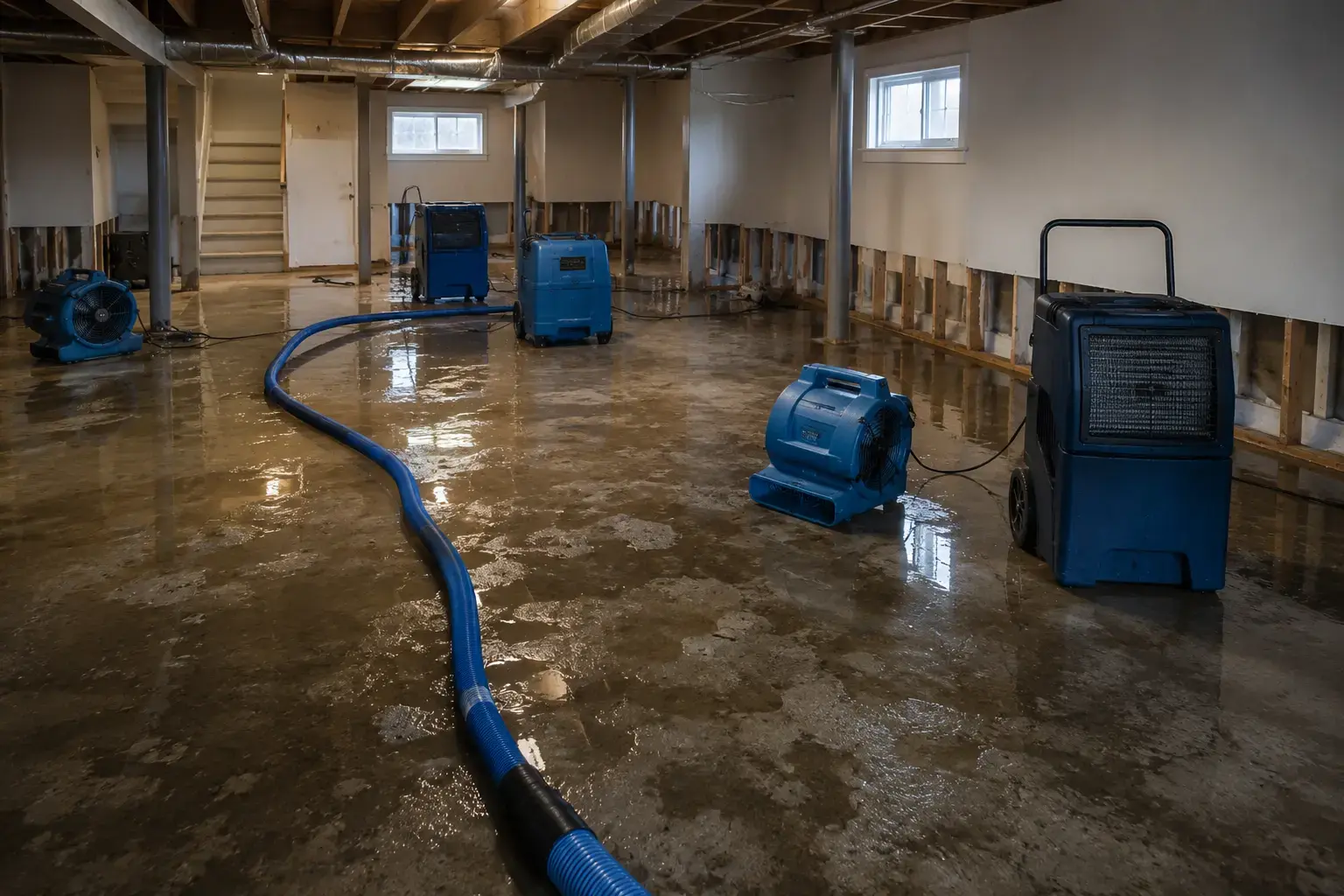
Representative service imagery. Recommended work depends on the source, water category, affected materials, safety conditions, and moisture readings.
Professional overview
Water extraction and structural drying is the controlled removal of standing water and moisture from affected rooms and building materials. Work can include extraction, removal of approved wet carpet or padding, cleaning, air movement, dehumidification, moisture monitoring, and a separate repair or replacement plan after drying.
Water can travel under flooring, into wall cavities, and through porous materials even when the surface looks dry. Rapid source control and drying reduce secondary damage. EPA guidance emphasizes drying wet materials within roughly 24–48 hours when possible to limit mold growth.
Act immediately after a burst pipe, appliance leak, rain intrusion, overflow, or clean-water event. Shut off the source when safe and avoid water near energized electrical systems. Sewage, contaminated floodwater, structural instability, or major electrical hazards require specialized emergency providers.
Why not to ignore it
Common signs
Our process
Service questions
Common causes include heavy rain entering a basement, a burst or leaking pipe, an overflowing appliance or sink, a hose left running, or another clean-water event. We first identify the source and apparent water category because sewage, contaminated floodwater, and other hazardous conditions require a different response.
Drying often continues for several days, but the actual time depends on the amount of water, affected materials, temperature, airflow, humidity, and moisture readings. Air movers and dehumidifiers should remain until the drying goal is confirmed rather than being removed according to a fixed promise.
We can assess removal of approved wet carpet, padding, and affected finish materials. Replacement carpet or flooring is quoted separately after drying and only when the work, materials, licensing, and installation plan have been confirmed.
We can clean affected areas and discuss an appropriate antibacterial or antimicrobial treatment after wet materials are removed. Significant, confirmed, or regulated mold remediation is a separate service and may require a qualified mold-remediation provider.
The core service is water extraction, removal of approved wet materials, cleaning, treatment where appropriate, moisture monitoring, and drying support. Structural reconstruction, electrical hazards, sewage, contaminated floodwater, extensive damage, and regulated remediation may require additional qualified contractors.
No. The source, water category, time, carpet condition, and padding all matter. We explain whether removal is the safer or more practical option before proceeding.
Ready to start?